Ad · AttentionWatch

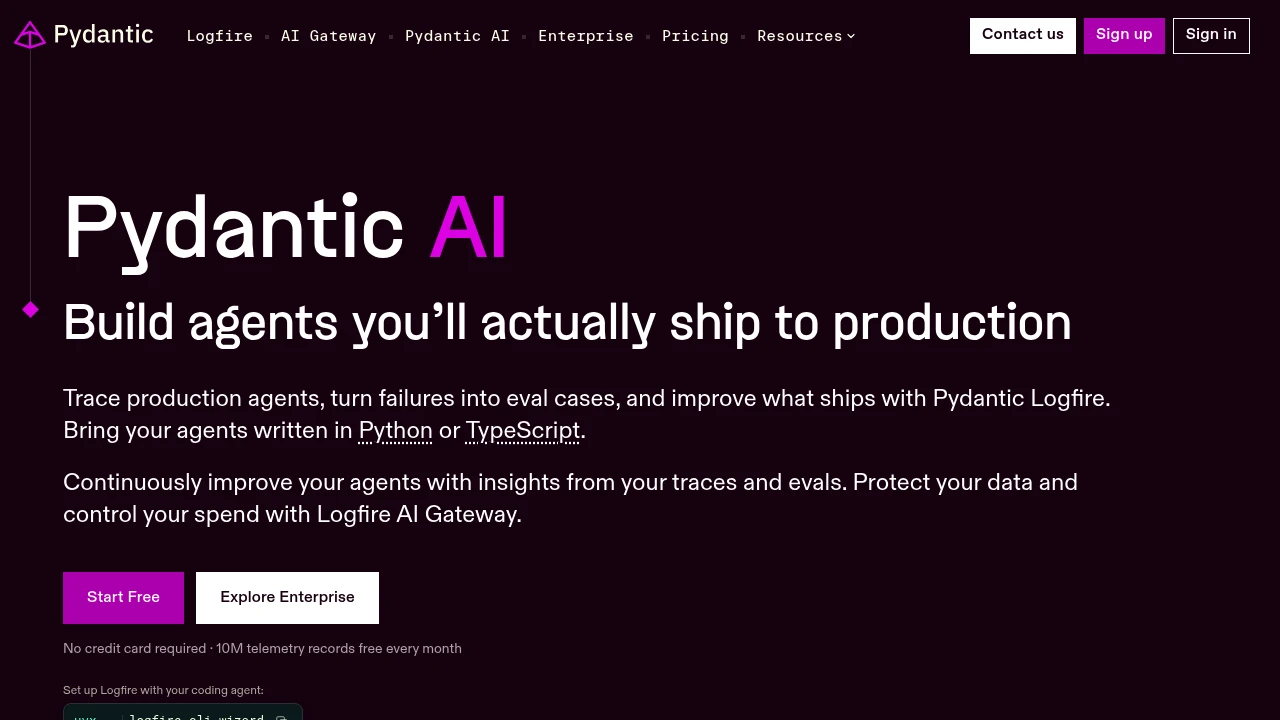
Pydantic brings an end-to-end workflow for teams building AI agents with a focus on what happens after deployment. It’s for engineers who need to debug real failures, turn them into repeatable evaluations, and keep costs under control.
The stack connects agent behavior to the systems involved in each request, so you’re not left guessing from model outputs alone.
Pydantic’s core idea is simple: one trace per request gives your team evidence instead of averages. When an AI app returns the wrong answer, the issue may be in missing context, a tool call, a model response, an API dependency, or a database query. Logfire keeps those parts together so you can debug the real path that produced the result.
Logfire is built on OpenTelemetry, with first-party SDKs for Python, JavaScript and TypeScript, and Rust. It also supports any language or framework that’s instrumented with OpenTelemetry, so you don’t have to rebuild your observability around a single vendor. The same trace view supports faster investigation and live evaluation workflows that improve agents based on real production behavior.

Pydantic also ties evaluation back to operations. Instead of treating evals as separate from production, it uses trace evidence to turn failures into new cases, so improvements target issues your users actually hit. AI Gateway adds spend awareness so production testing and agent runs don’t quietly burn budget.
+2 more


